
Welcome to Cleveland NORML
Working to Reform Marijuana Laws in Cleveland



Hemp as Renewable Energy
Nov 26, 2010 -
Important innovations in the production and use of biofuels directly relate to hemp agriculture. With few exceptions, industrial hemp is the most environmentally friendly and high-yield source of biofuel. The following studies and innovations are perfect examples.
Hemp produces viable biodiesel, study finds
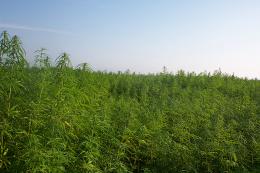
Of all the various uses for Cannabis plants, add another, “green” one to the mix.
Researchers at UConn have found that the fiber crop Cannabis sativa, known as industrial hemp, has properties that make it viable and even attractive as a raw material, or feedstock, for producing biodiesel – sustainable diesel fuel made from renewable plant sources.
The plant’s ability to grow in infertile soils also reduces the need to grow it on primary croplands, which can then be reserved for growing food, says Richard Parnas, a professor of chemical, materials, and biomolecular engineering who led the study.
“For sustainable fuels, often it comes down to a question of food
versus fuel,” says Parnas, noting that major current biodiesel plants
include food crops such as soybeans, olives, peanuts, and rapeseed.
“It’s equally important to make fuel from plants that are not food, but
also won’t need the high-quality land.”
Industrial hemp is grown across the world, in many parts of Europe
and Asia. Fiber from the plant’s stalk is strong, and until the
development of synthetic fibers in the 1950s, it was a premier product
used worldwide in making rope and clothing.
Today, there are still parts of the world that rely on Cannabis stalks as a primary fiber, mainly because of its ability to grow “like a weed,” without requiring lots of water, fertilizers, or high-grade inputs to flourish. But the seeds, which house the plant’s natural oils, are often discarded. Parnas points out that this apparent waste product could be put to good use by turning it into fuel.
“If someone is already growing hemp,” he says, “they might be able to produce enough fuel to power their whole farm with the oil from the seeds they produce.” The fact that a hemp industry already exists, he continues, means that a hemp biodiesel industry would need little additional investment.
With his graduate student Si-Yu Li and colleagues James Stuart of the Department of Chemistry and Yi Li of the Department of Plant Sciences, Parnas used virgin hemp seed oil to create biodiesel using a standardized process called transesterification. The group then tested the fuel for a suite of characteristics in the Biofuels Testing Laboratory at UConn’s Center for Environmental Science and Engineering.
The hemp biodiesel showed a high efficiency of conversion – 97 percent of the hemp oil was converted to biodiesel – and it passed all the laboratory’s tests, even showing properties that suggest it could be used at lower temperatures than any biodiesel currently on the market.
Read the rest at Physorg.com
A high-yield biomass alternative to petroleum for industrial chemicals
A team of University of Massachusetts Amherst chemical engineers report in today's issue of Science that they have developed a way to produce high-volume chemical feedstocks including benzene, toluene, xylenes and olefins from pyrolytic bio-oils, the cheapest liquid fuels available today derived from biomass. The new process could reduce or eliminate industry's reliance on fossil fuels to make industrial chemicals worth an estimated $400 billion annually.
Read the rest at Phsyorg.com
Waiting to Inhale hits TV screens across America
Nov 24, 2010 -
Americans for Safe Access in partnership with Jed Riffe Films is pleased to inform you that the award winning documentary, WAITING TO INHALE, will have its national broadcast TV premiere on two cable networks in the coming weeks.
The first airing of “Waiting to Inhale” is taking place today, Wednesday the 24th at 10:30pm pacific/1:30am eastern with several encore airings throughout the week. The LINKTV premiere is part of their pledge week activities — so give ‘em a little love! You can find LINKTV on channel 375 on both Dish TV and Direct TV.
The premiere on Free Speech TV is set for Sunday, December 19, 9pm EST/6PM PST which is now airing on Direct TV channel 348, and DISH Network channel 9415.
These broadcasts provide advocates an excellent opportunity to reach audiences who have not yet seen the film, especially in non-medical marijuana states where education is desperately needed. Set your DVR so that you can share this documentary with your friends and loved ones whenever you want.
Hemp Seed Pills Show Promise in Study on Excessive Syndrome
Nov 22, 2010 -
From Cannabis Fantastic
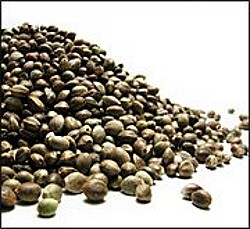
A new study is out that shows hemp seed pills, a staple in Chinese herbal medicine stores, relieves suffering of constipation known in traditional Chinese medicine as “excessive syndrome”, where the bowels dry out and cause problems such as dry mouth, abdominal swelling and pain that leads to trouble sleeping. The study done at the Hong Kong Baptist University looked into the hemp seed pills that have been used to treat constipation for more than 1,000 years in traditional Chinese medicine. The study took 120 people who suffered from severe constipation and split them into two groups, one received 7.5 grams of hemp seed pills in 150 ml of hot water and the other got a placebo, both were treated twice a day for 8 weeks. Forty three percent of those taking the hemp seed pill reported improvement compared to only eight percent on the placebo. Blood tests revealed no damage to the kidneys or liver observed in those that took the hemp seed pills. The conclusion was that that Hemp Seed Pills were safe for alleviating constipation. The traditional hemp seed pills that have been available in the East for hundreds of years consist of six different herbs along with crushed hemp seeds.
Read the rest at Cannabis Fantastic
Can Marijuana Prevent Cancer?
Nov 14, 2010 -
From the Medical Cannabis Journal:
Dr. Donald Tashkin is a widely published pulmonologist who for three decades has conducted investigations for the National Institute of Drug Abuse and other government agencies on the adverse effects of marijuana and other drugs on the human body.
Studies conducted by Dr. Tashkin in 1990 found that marijuana smoke has almost the exact same carcinogens (cancer causing agents) as tobacco smoke and that the concentration of these carcinogens was exceedingly higher in marijuana smoke. These studies are the basis for the government's warning in thousands of ads that smoking one marijuana joint does as much damage as smoking four cigarettes.
Donald Tashkin
Since it is well documented that the carcinogens in tobacco smoke are directly responsible for the development of lung cancer in tobacco smokers, government marijuana prohibitionists reasoned that marijuana smoke must also cause lung cancer because it contains even stronger concentrations of these cancer causing agents.
To document a connection between lung cancer and marijuana smoking, Dr. Tashkin received a very large grant from the National Institute of Drug Abuse. With over 2,200 subjects, the research was one of the largest case control studies of its kind ever!
The government was horrified at the results and did its best to ignore them as Dr. Tashkin failed to find any link between smoking marijuana and the development of lung cancer. In almost every category studied, a person was no more likely to develop lung cancer if they smoked marijuana than if they didn't smoke marijuana.Read the rest at the Cannabis Medical Journal

